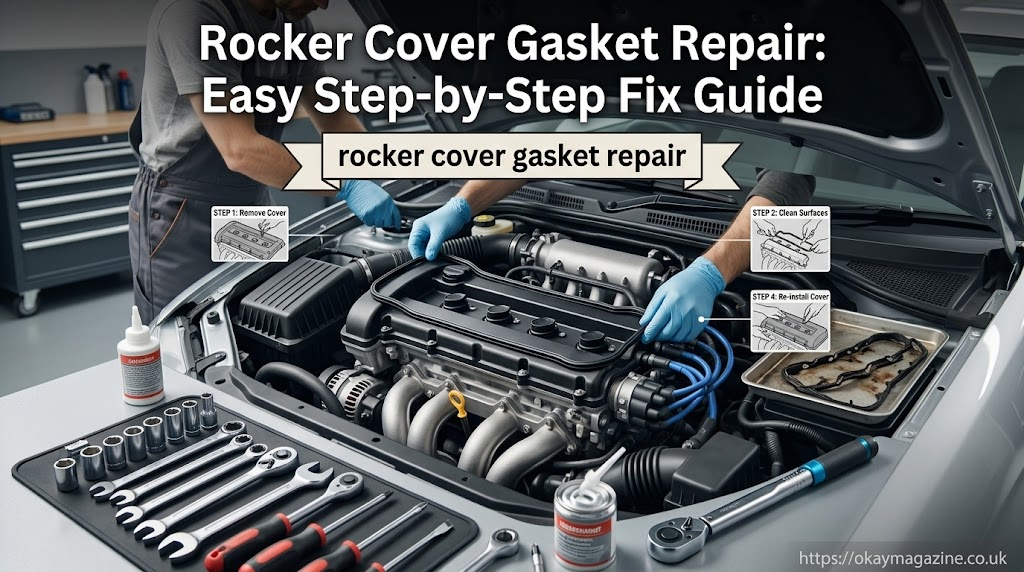

Have you ever looked under your car bonnet and seen a messy, oily wet spot on top of your engine? That gooey mess usually means you need a rocker cover gasket repair. Your engine has a top lid called a rocker cover, which people also call a valve cover. Inside this lid, a thin rubber or cork seal sits tight to keep the engine oil from splashing out. This small rubber part is the gasket, and it works very hard every single day.
When your engine runs, it gets super hot, and then it cools down when you park. Over many miles, this constant heat makes the rubber seal get hard, brittle, and cracked. Once it cracks, the vital oil starts to ooze out onto other hot engine parts. A rocker cover gasket repair replaces this worn-out seal with a fresh new one to keep your oil inside. Fixing this early saves your engine from losing oil and protects other parts from getting ruined by grease.
Clear Signs Your Car Needs a Rocker Cover Gasket Repair
You do not need to be a professional mechanic to spot a failing seal on your engine. The most common sign is a strong smell of burning oil while you are driving down the road. This happens because leaking oil drips onto the super-hot exhaust pipes and starts to cook. You might also see thick black smoke or greasy puddles on your driveway floor. If you ignore these signs, the oil can cause major trouble under the bonnet.
Another sneaky sign shows up when you change your spark plugs and find them covered in dark wet oil. When the inner seal fails, oil floods the spark plug holes and causes the engine to misfire or run rough. Your dashboard oil light might blink on because the engine fluid level is getting way too low. Seeing any of these clear warning signs means a rocker cover gasket repair should be done right away.
Detailed Cost Breakdown for Rocker Cover Gasket Repair
| Repair Choice | Parts Cost | Labor Cost | Total Estimated Cost | Time Needed |
| DIY Home Repair | £15 – £40 | £0 (Free) | £15 – £40 | 1 – 3 Hours |
| Local Independent Garage | £20 – £50 | £60 – £120 | £80 – £170 | 1 – 2 Hours |
| Main Dealership Service | £40 – £90 | £150 – £300 | £190 – £390 | 1 – 2 Hours |
Essential Tools and Materials You Need for the Job
Before you start your rocker cover gasket repair, you must gather the right tools around your workspace. You do not need fancy gear, just a basic socket set with a ratchet and some extension bars. A standard torque wrench is highly recommended so you can tighten the bolts perfectly without snapping them off. You will also need a plastic scraper tool to clean off the old crusty rubber bits safely.
For materials, buy a high-quality replacement gasket made specifically for your exact car make and model year. Grab a small tube of automotive silicone sealant, which is often called RTV sealant, for the sharp corners. Finally, keep some aerosol brake cleaner fluid and clean microfiber rags handy to wipe away the old grease. Having everything ready on a clean table makes the whole fixing process smooth, fast, and very easy.
Preparing Your Vehicle Safely for Engine Work
Safety must always come first whenever you work on a vehicle inside your garage or driveway. Park your car on a flat, level surface and pull the handbrake up as tight as it goes. Pop the bonnet open and let the engine cool down completely for at least one full hour. Touching a hot engine can cause nasty skin burns, and hot oil can hurt your hands.
Once the engine feels cold to the touch, open the boot and disconnect the negative car battery terminal. This simple step stops any accidental electrical sparks or short circuits while you are working near wires. Lay a soft, clean wing cover or an old blanket over the painted metal parts of your car. This protects your shiny paint from getting scratches or greasy smudge marks from your clothes as you lean over.
Removing the Engine Cover and Obstructing Parts
Modern cars usually have a big plastic decorative shield covering the top area of the engine bay. Use a socket or a screwdriver to remove the small bolts holding this plastic cover in place. Lift the cover straight up and set it safely aside in your garage so nobody trips over it. Now, you will see the actual metal or plastic rocker cover surrounded by wires and hoses.
Take a close look at any spark plug wires, electrical plugs, or black rubber breather hoses in your way. Carefully unclip each electrical connector and push the wiring harness gently to the side of the engine bay. You can use pieces of masking tape to label each hose so you know exactly where it goes later. Clearing these obstructing parts out of the way gives you plenty of room for a clean rocker cover gasket repair.
Unscrewing the Rocker Cover Bolts Correctly
Now you can see all the small bolts holding the metal cover down against the engine cylinder head. Look closely because some bolts might be hidden underneath small wire brackets or plastic clips near the back. Use your socket wrench to loosen each bolt just a little bit at a time in a crisscross pattern. Loosening them evenly stops the long cover from bending, warping, or cracking from uneven metal pressure.
Once all the bolts are completely loose, spin them out with your fingers and put them in a small cup. Keeping the bolts in a cup ensures you do not lose any on the floor or inside the engine. Gently lift the rocker cover straight up off the engine block using both of your hands. If it feels stuck tight, tap it very gently with a soft rubber mallet to break the old seal.
Cleaning the Engine Metal Surfaces Like a Pro
This cleaning step is the most important part of the whole rocker cover gasket repair job for a leak-free seal. Peel the old, hard rubber gasket out of the groove inside the cover and throw it in the bin. Use your plastic scraper to scratch away any stuck-on pieces of old rubber or dried silicone sealant. Be very gentle so you do not scratch the soft aluminum metal surfaces of the engine.
Spray a good amount of brake cleaner fluid onto a clean rag and wipe the metal edges until they shine. The metal mating surfaces must be completely dry, shiny, and 100% free of old slippery oil. Any tiny bit of grease left behind will stop the new rubber seal from bonding properly to the metal. A clean surface guarantees your new part will last for many years without dripping a single drop.
Installing the New Gasket Seal Properly
Open the new parts box and press the fresh rubber seal firmly into the channel of the rocker cover. Make sure the rubber fits flat inside the groove all the way around without twisting or bunching up anywhere. Pay close attention to the curved sections and corners to ensure the rubber sits totally flush and secure. Turn the cover upside down briefly to make sure the new gasket does not fall out easily.
Next, look at the engine block where the front camshaft caps meet the flat top surface of the head. Apply a tiny dot of RTV silicone sealant onto these specific corner joints for extra protection against oil leaks. Do not use too much silicone, just a small pea-sized drop is perfect for sealing those tricky spots. Now, carefully lower the cover back down onto the engine without moving the new rubber out of place.
Tightening the Bolts to the Right Specification
Thread all the metal bolts back into their holes using your fingers so you do not strip the delicate threads. Once they are all spinning smoothly, grab your torque wrench to tighten them to the exact factory settings. You can find this precise tightness number inside your car manual or by looking it up online. Just like before, tighten the bolts in a crisscross pattern starting from the middle and working outwards.
Using a torque wrench prevents you from overtightening the bolts, which can easily crush and ruin the new rubber. It also prevents under-tightening, which leaves the cover too loose and allows oil to seep out immediately. Taking your time during this step ensures the cover applies perfectly even pressure across the whole new gasket. A correct rocker cover gasket repair relies completely on this balanced, even pressure to stop future oil leaks.
Reassembling and Testing for Oil Leaks
Now that the cover is secure, it is time to put all the other parts back together. Reconnect all the black rubber breather hoses and click the electrical wire plugs back into their proper spots. Remove your masking tape labels as you attach each part back to its original factory position. Reconnect the negative battery cable tightly using your small wrench tool to bring power back to the car.
Pull the engine oil dipstick out, wipe it clean, and check your fluid level to see if it is low. Top up the engine with the correct fresh oil if you lost some during the old leaky days. Turn the car key to start the engine and let it idle quietly in your driveway for ten minutes. Grab a bright torch and look closely around the edges of the cover to ensure no oil is seeping out.
Real Expert Insights on Maintaining Your Engine Seals
Over my many years working around greasy car engines, I have learned a few extra secrets about these seals. Using cheap, low-quality engine oil actually breaks down rubber gaskets much faster than premium synthetic oils do. High-quality oil contains special conditioners that keep internal rubber seals soft, flexible, and healthy for a longer time. Spending a tiny bit more on premium oil saves you big money on repairs later down the road.
Another major cause of blown gaskets is a clogged PCV valve, which stands for Positive Crankcase Ventilation. If this little valve gets blocked with dirt, massive air pressure builds up inside the top of your engine. This high pressure forces the oil to push past the rubber seal, causing a brand-new leak to start. Always inspect or replace your cheap PCV valve whenever you perform a rocker cover gasket repair for peace of mind.
Frequently Asked Questions
Can I drive my car if it needs a rocker cover gasket repair?
You can drive short distances if the leak is very small, but it is not safe to ignore for long. Dripping oil can land on hot exhaust parts and start a dangerous fire under your bonnet. The oil can also ruin expensive rubber coolant hoses and electrical alternators underneath the leak. It is always best to perform a rocker cover gasket repair as soon as you find the issue.
How long does a new rocker cover gasket last?
A high-quality replacement rubber gasket usually lasts between 20,000 to 50,000 miles before wearing out again. The exact lifespan depends heavily on your driving habits, local weather, and how often you change your engine oil. Keeping your engine cool and clean helps the fresh rubber stay soft and prevents it from cracking early.
Why is my new gasket leaking again after fixing it?
If your new seal leaks, the metal surfaces might not have been cleaned well enough before installation. Even a tiny speck of old crusty rubber or grease can create a gap for oil to escape. Another common reason is that the bolts were tightened unevenly without using a proper torque wrench.
Do I need to use liquid glue sealer on the whole gasket?
No, you should never coat the entire rubber gasket with liquid RTV silicone glue or sealant. Gaskets are designed to work dry, and extra glue can slip around and cause the rubber to pop out. Only apply a tiny drop of silicone sealant on the sharp corners or joints where metal engine parts meet.
What is the main difference between a valve cover and a rocker cover?
They are actually two different names for the exact same part on your car engine. Some car brands call it a valve cover, while others call it a rocker cover depending on where they were made. Both terms describe the top metal lid that protects your engine valves and keeps your oil sealed inside.
How can I tell if the leak is coming from somewhere else?
Clean the entire greasy engine area with a degreaser spray and water, then dry it completely with a rag. Drive the car around the block for five minutes, then park and look under the bonnet with a torch. You will see fresh, shiny oil trail directly from the source, showing you if it is the rocker cover.
Conclusion
Completing a rocker cover gasket repair is a fantastic way to keep your car engine clean, safe, and running smooth. This simple maintenance task stops messy oil stains on your driveway and prevents dangerous smoke under your bonnet. Whether you hire a mechanic or do it yourself, addressing this leak early protects your wallet from massive repair bills. Check your oil level today, look for wet spots, and give your car the care it deserves!