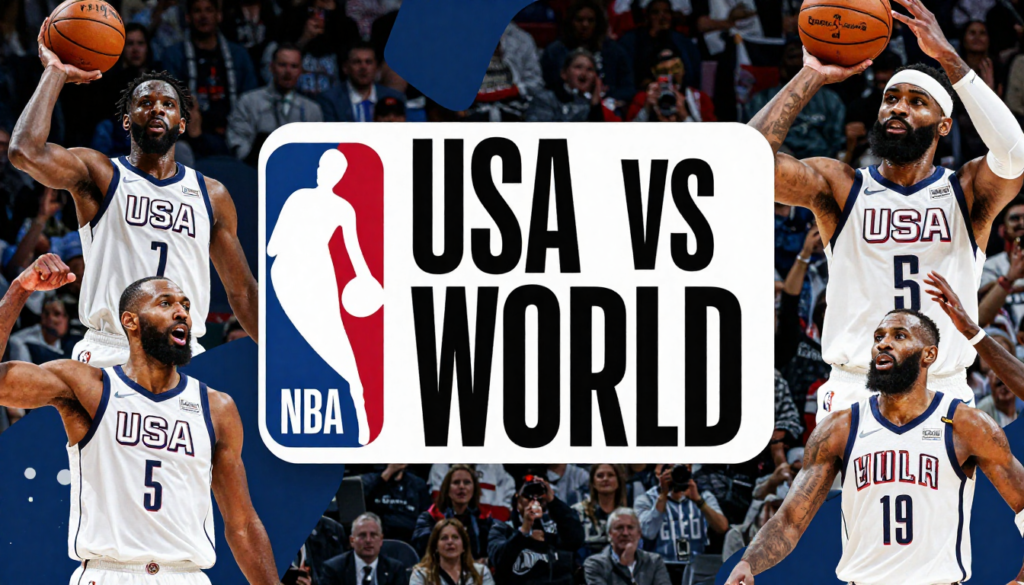

Basketball has long been dominated by the USA vs World NBA, the premier professional league in the United States. However, in recent decades, the NBA has evolved into a truly global phenomenon, attracting top talent from around the world. The comparison between USA and the world in the NBA has become a popular topic, highlighting not only the dominance of American players but also the significant rise of international stars who have reshaped the league.
The Rise of American Basketball
The United States is often seen as the birthplace of modern basketball, and for decades, the NBA was almost exclusively an American showcase. Legendary players such as Michael Jordan, Magic Johnson, Larry Bird, and LeBron James cemented the USA’s dominance in professional basketball. The culture of basketball in the U.S., from high school programs to college basketball and ultimately the NBA, has provided a structured path for athletes to develop world-class skills.
American players have traditionally set the standard for athleticism, work ethic, and skill in the league. From the fast-paced style of play to a focus on individual talent and showmanship, U.S.-born players have heavily influenced the way the game is played and marketed. The dominance of USA players is also reflected in international competitions, such as the Olympics and the FIBA World Cup, where Team USA has historically been the gold standard.
International Influence in the NBA
While the NBA was historically dominated by Americans, the globalization of basketball has brought a significant influx of international talent. Players from countries such as Spain, France, Australia, Serbia, and Canada have risen to prominence, creating a more competitive and diverse league. The success of international players has challenged the notion that American athletes are inherently superior in basketball.
The 1990s and early 2000s marked the beginning of this global influence. Legends like Dirk Nowitzki from Germany, Tony Parker from France, and Manu Ginóbili from Argentina paved the way for future international stars. Today, players like Giannis Antetokounmpo (Greece), Luka Dončić (Slovenia), and Joel Embiid (Cameroon) dominate headlines, demonstrating that the NBA is no longer an exclusively American domain. International players bring a unique blend of skills, versatility, and tactical awareness, enriching the league’s style of play.
USA vs World in the NBA All-Star Game
One of the most notable events highlighting the USA vs world dynamic was the NBA All-Star Game format from 2018 to 2023. The traditional Eastern Conference vs Western Conference matchup was replaced with a Team USA vs Team World format, pitting American All-Stars against international All-Stars. This approach not only celebrated the NBA’s international diversity but also provided fans with a fresh perspective on talent across borders.
The USA vs World All-Star Games were exciting showcases of skill, athleticism, and creativity. While Team USA maintained a slight edge in terms of victories, the World team consistently demonstrated that international players could compete at the highest level. The event also highlighted the league’s efforts to promote basketball as a global sport, bridging cultural differences through shared passion for the game.
The Impact on Playing Styles
The integration of international talent has influenced NBA playing styles. While American players traditionally emphasize individual athleticism, international players often focus on fundamentals, spacing, shooting, and team-oriented strategies. This blending of styles has created a more balanced and dynamic NBA, where versatility and basketball IQ are as important as raw athletic ability.
Players like Nikola Jokić (Serbia) exemplify the modern NBA player who combines playmaking, scoring, and rebounding in innovative ways. Similarly, European guards bring refined passing and perimeter shooting skills that complement the high-flying American approach. The convergence of styles has not only enhanced the league’s competitiveness but also made it more entertaining and globally appealing.
The Business and Cultural Influence
The USA vs World dynamic extends beyond the court. The NBA has actively marketed itself as a global brand, opening offices in China, Europe, and Africa, and hosting games abroad. International players serve as ambassadors of the league in their home countries, increasing fan engagement and merchandise sales worldwide.
The presence of international stars has also influenced cultural exchange. Young players from around the world study the NBA style, while Americans gain exposure to international techniques and philosophies. This mutual influence strengthens the league’s position as a cultural phenomenon, transcending national boundaries.
Future of USA vs World in the NBA
Looking forward, the USA vs World narrative in the NBA is likely to grow stronger. The globalization of basketball ensures a continuous pipeline of talent from all corners of the globe. With youth development programs expanding internationally and technology enabling players to gain exposure more easily, the next generation of NBA stars will be increasingly diverse.
The league may also explore new ways to celebrate the international influence of its players, potentially integrating more global events, tournaments, and fan experiences. The balance between American dominance and international excellence will shape not only the future of the NBA but also the global perception of basketball as a unifying sport.
Conclusion
The NBA is no longer just an American league; it is a global stage where talent from the USA and the world collide in thrilling competition. While American players have historically set the benchmark for excellence, international stars have demonstrated that basketball is a truly universal game. From the All-Star Game to everyday league play, the USA vs World dynamic enriches the sport, offering fans a diverse, exciting, and constantly evolving basketball experience. As the league continues to grow internationally, this friendly rivalry between USA and the world will remain central to the NBA’s identity and its global influence.
Frequently Asked Questions (FAQs)
1. Who has more NBA stars, USA or World?
Historically, the majority of NBA players are from the USA. However, international players have steadily increased, now making up about 20% of the league roster, with some teams featuring multiple international stars.
2. Has Team World ever beaten Team USA in the All-Star Game?
Yes. Team World has won several NBA All-Star Games since the introduction of the USA vs World format, showcasing the competitiveness of international talent.
3. Which international player has had the biggest impact in the NBA?
Players like Dirk Nowitzki, Giannis Antetokounmpo, and Luka Dončić have had enormous impacts, changing perceptions about international players’ abilities and contributing to championships and MVP awards.
4. How has international talent changed NBA playing styles?
International players often emphasize fundamentals, spacing, shooting, and team play. Their influence has encouraged more versatile, strategic, and skill-oriented gameplay across the league.
5. Will the NBA continue to grow globally?
Absolutely. With international players, global fan engagement, and marketing efforts abroad, the NBA is poised to become even more international, attracting talent and fans from every continent.