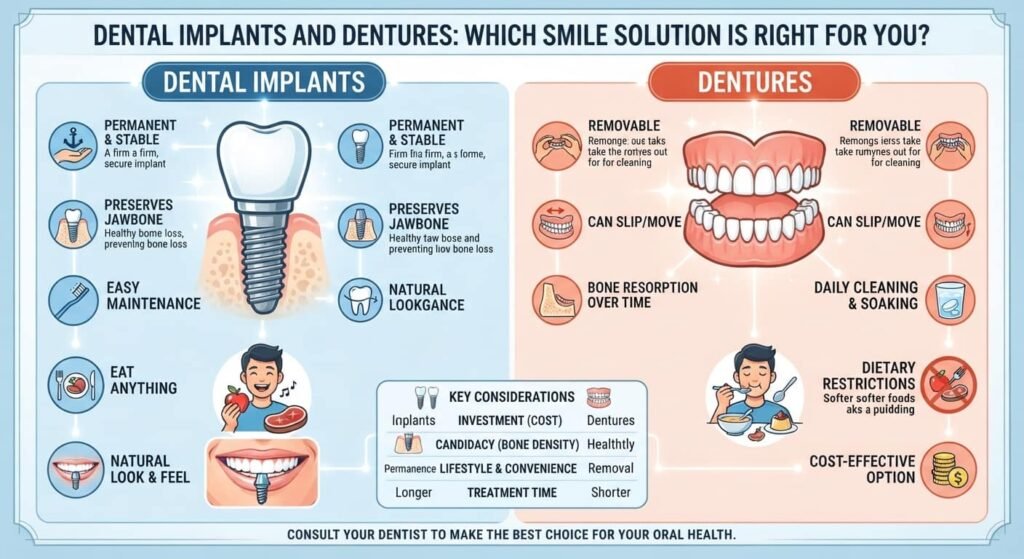

Confused about dental implants and dentures? Discover the differences, pros, cons, costs, and care tips to choose the right smile solution for you.
Missing teeth can make it tough to eat your favorite foods, laugh out loud, or feel good about your smile. When you are ready to fix gaps in your teeth, you usually run into two main choices: dental implants and dentures. Both options have helped millions of people get their confidence back, but they work in very different ways. Choosing between them can feel a bit overwhelming if you do not know what to expect. Think of this guide as a friendly chat with an expert who wants to help you understand your options. We will break down everything you need to know about dental implants and dentures in plain, simple English. By the end of this article, you will feel ready to talk to your dentist and make the best choice for your healthy, happy smile.
What Are Dental Implants?
Dental implants are tiny metal posts made of strong titanium that a dentist puts right into your jawbone. They act just like the natural roots of your missing teeth. Over a few months, your jawbone grows around the metal post and holds it super tight. Once it is secure, your dentist attaches a custom-made fake tooth on top. This replacement tooth looks, feels, and works just like a real tooth. You do not have to take it out to clean it, and you can bite into crunchy apples without any worry. Many people love dental implants because they last a very long time and help keep your jawbone strong and healthy. They are basically a permanent upgrade for your mouth that blends right in with your natural teeth.
Table of Contents
What Are Traditional Dentures?
Traditional dentures are removable false teeth that sit right on top of your gums to replace missing teeth. If you are missing all or most of your teeth, a full set of dentures can give you back your smile and help you chew. If you only have a few missing teeth, partial dentures use tiny metal clasps to clip onto your remaining healthy teeth. You can take your dentures out at night to clean them and let your gums rest. Modern dentures look a lot more natural than the ones your grandparents might have worn. They are custom-made to fit the unique shape of your mouth and match the shade of your natural teeth. While they take a little bit of practice to get used to wearing and eating with, they are a great, non-surgical way to replace a full mouth of teeth.
Key Differences in Cost and Budget
When looking at dental implants and dentures, money is usually one of the biggest things people think about. Traditional dentures generally cost a lot less upfront, making them a budget-friendly choice for many families and older adults. They are also often partially covered by dental insurance plans. On the other hand, dental implants come with a higher price tag because they involve surgery, high-tech materials, and multiple visits to the dentist over several months. However, many people view dental implants as a smart long-term investment. Because implants can last for decades or even a lifetime without needing replacement, you might actually spend less money over the years compared to replacing worn-out dentures. Always talk to your dentist about payment plans to see what fits your wallet best.
Comfort, Fit, and Daily Wear
Comfort can totally change how much you enjoy your daily life with your new teeth. Dental implants feel just like your original teeth because they are firmly anchored into your jawbone. You do not have to worry about them shifting, sliding around, or clicking when you talk and laugh. Traditional dentures rest on top of your gums, which means they can sometimes slip or rub sore spots, especially if your jawbone changes shape over time. Many people use special denture adhesive pastes to keep their dentures glued firmly in place during the day. Implants require no special sticky glue or messy pastes at all. You simply brush and floss dental implants exactly the same way you care for your natural teeth every single day.
Health Benefits for Your Jawbone
Your jawbone actually needs the roots of your teeth to stay strong, active, and healthy. When you lose a tooth, the bone underneath starts to shrink away because it is no longer getting any stimulation. Dental implants are the only tooth replacement option that actually replaces the tooth root. This tricks your jawbone into staying active and keeps your facial structure looking full and youthful. Traditional dentures sit on top of the gums, meaning they cannot stop the underlying jawbone from shrinking over time. As the bone shrinks, your dentures might start feeling loose and wobbly, requiring your dentist to reline or remake them to fit your changing mouth. Choosing dental implants protects your long-term facial bone health in a way that removable dentures simply cannot do.
The Treatment Process and Timeline
Getting dental implants and dentures takes two very different paths. Traditional dentures take a much shorter time to get. Your dentist will take molds or digital scans of your mouth, send them to a lab, and you will usually have your new dentures ready in just a few weeks. Dental implants, however, require patience and a much longer timeline. The entire implant process can take anywhere from three to nine months. This time allows your surgical site to heal completely and lets the titanium post fuse securely with your jawbone through a natural process called osseointegration. While waiting for implants requires extra patience, the permanent results are well worth the time investment for most people looking for a permanent fix.
Comparing Durability and Lifespan
You want your new smile to last as long as possible without constant repairs. Dental implants are famous for their incredible strength and durability. With good daily brushing, flossing, and regular dental checkups, a dental implant can easily last for twenty years or even the rest of your life. The crown on top might need minor wear-and-tear replacement after ten or fifteen years, but the metal root stays put. Traditional dentures have a shorter lifespan. Because your gums and jawbone change shape naturally over the years, dentures usually need to be relined, adjusted, or completely replaced every five to eight years. Choosing between durability and initial convenience helps guide many patients toward the right tooth replacement choice for their lifestyle.
Eating and Speaking with Your New Teeth
Enjoying your favorite foods is one of the best parts of having a healthy smile. With dental implants, you can bite into sticky caramel, chewy steak, and crunchy corn on the cob without a single second thought. They give you one hundred percent of your natural chewing power back. Traditional dentures give you back about twenty to twenty-five percent of your chewing power. You might need to avoid extremely hard or sticky foods to keep your dentures from moving or popping loose. Speaking clearly is also super easy with implants because they never shift around. With new dentures, you might lisp or whistle slightly at first, but practicing reading out loud at home helps your tongue get used to them in no time.
Maintenance and Daily Cleaning Routine
Keeping your teeth clean keeps your breath fresh and your gums healthy. Dental implants require the exact same daily care as natural teeth. You just brush twice a day, use mouthwash, and carefully floss around the implant crown to remove trapped food particles. Traditional dentures require a different cleaning routine every single night. You must take your dentures out of your mouth, rinse them off, and scrub them gently with a soft brush and special denture cleanser, avoiding harsh regular toothpaste that can scratch them. You also need to soak your dentures overnight in water or a cleaning solution to keep them moist and prevent them from warping or drying out while you sleep.
Making the Right Choice for Your Smile
Deciding between dental implants and dentures comes down to your personal health, budget, and daily goals. If you are in good general health, have enough jawbone, and want a permanent, worry-free solution, dental implants are likely your best match. If you want a more affordable option, want to avoid surgery entirely, or need to replace a full arch of teeth quickly, traditional dentures are a wonderful choice. Sit down with an experienced dentist for a full consultation and x-rays. They can look at your unique mouth and help you weigh all the pros and cons. Remember that taking care of your smile is one of the best investments you can ever make in your overall health and happiness.
Detailed Dental Comparison Guide
| Feature | Dental Implants | Traditional Dentures |
| Type | Permanent fixed tooth replacement | Removable appliance |
| Average Cost | Higher upfront investment | More budget-friendly |
| Lifespan | 20+ years to a lifetime | 5 to 8 years before replacement |
| Bone Health | Preserves and stimulates jawbone | Does not prevent bone shrinkage |
| Maintenance | Normal brushing and flossing | Nightly soaking and special cleaning |
| Chewing Power | 100 percent restored power | 20 to 25 percent restored power |
Frequently Asked Questions
Which option lasts longer, dental implants or dentures?
Dental implants last much longer than dentures. Implants can last for decades or even a lifetime because they fuse directly with your jawbone. Traditional dentures usually need to be adjusted, relined, or replaced every five to eight years due to normal wear and changes in your gum shape.
Does getting a dental implant hurt?
Most patients report that getting a dental implant hurts a lot less than they expected. Dentists use strong local numbing medicine during the procedure so you will not feel any sharp pain. You might feel some mild soreness and swelling for a few days after the surgery, which is easily managed with regular over-the-counter pain relievers.
Can anyone get dental implants?
Not everyone is an instant candidate for dental implants. You need to have healthy gums and enough strong jawbone to support the metal post. If you have low bone density, gum disease, or uncontrolled health conditions like diabetes, your dentist might suggest bone grafting or recommend traditional dentures instead.
Do dentures look fake when you smile?
Modern dentures look much more natural and realistic than older styles. Skilled dental labs design custom dentures using high-quality materials that mimic the natural translucency of real teeth and match your exact gum color. Once you get used to wearing them, most people will never guess you are wearing dentures.
How do I clean my dental implants every day?
Cleaning dental implants is very easy and straightforward. You simply brush them twice a day with a soft-bristled toothbrush and fluoride toothpaste, and floss daily around the crown. Regular dental checkups are still vital to make sure your gums and the surrounding bone stay completely healthy.
Are traditional dentures covered by dental insurance?
Many dental insurance plans cover a portion of the cost for traditional dentures because they are considered a standard restorative treatment. Dental implants are sometimes classified as cosmetic procedures by certain insurance providers, though more insurance companies are starting to offer partial coverage for them as well.
Conclusion
Choosing between dental implants and dentures is a major milestone on your journey toward a healthier, more confident smile. Both options offer incredible benefits depending on your budget, health needs, and lifestyle goals. Dental implants give you a permanent, rock-solid feel that protects your jawbone and lets you eat your favorite foods with zero worry. Traditional dentures offer a budget-friendly, non-surgical path to restoring a full smile quickly and comfortably. No matter which route you choose, taking action to replace missing teeth improves your speech, boosts your self-esteem, and protects your overall health. Take the next step today by scheduling a chat with your dentist to explore your options and start smiling brightly again.